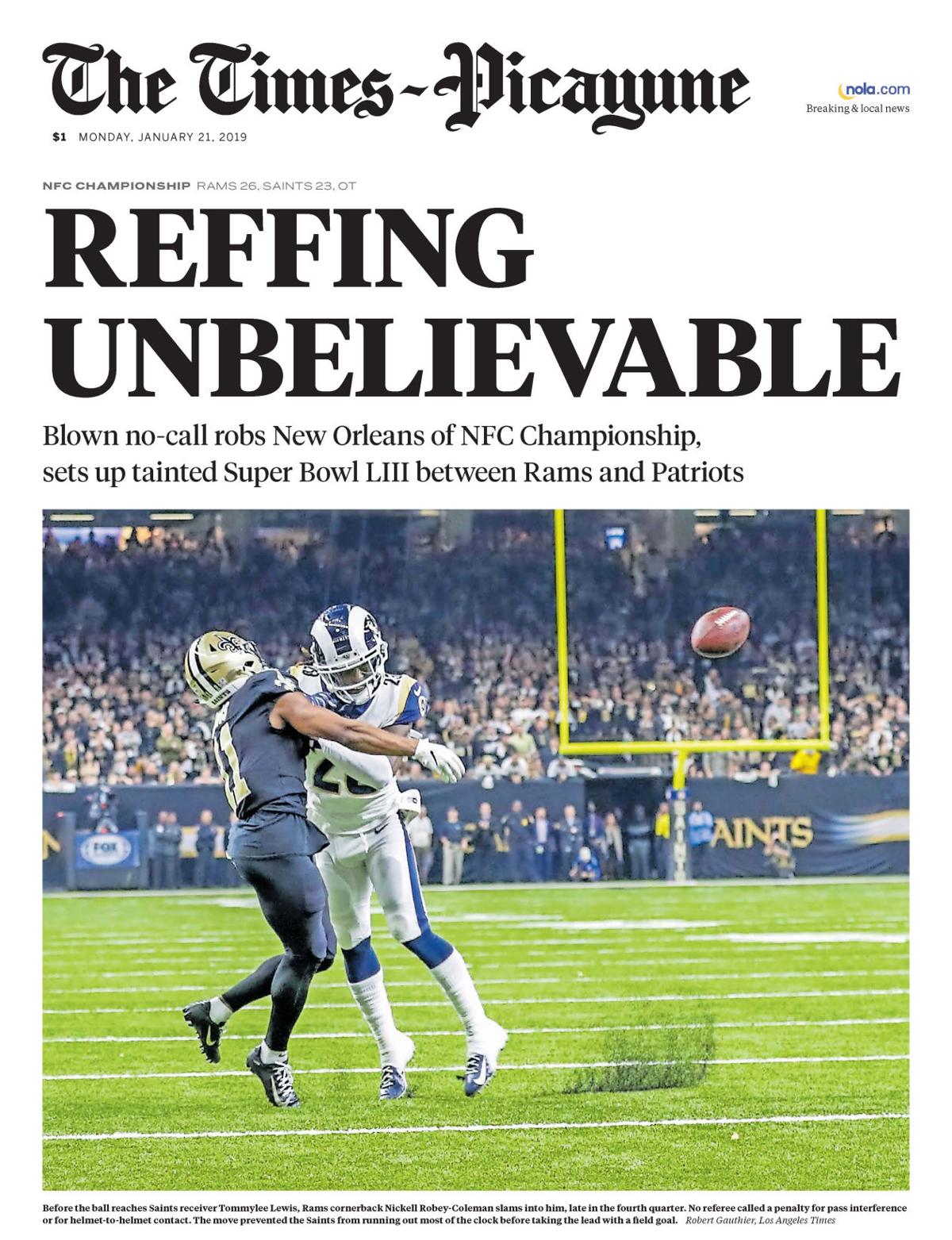
Whatever people complain about the most during a particular NFL season leads to a new rule change to try and directly combat it. “What is a catch?” had been the biggest rallying cry in past seasons, and there has been changes made to the rule to try and figure out what is and isn’t a catch. However, it seems to still be unclear, and each time the league tries to make a change, it gets more and more convoluted. We are on the same path with being able to review pass interference. The rule change to allow pass interference review has only been approved for the 2019 season, so prepare yourselves for a season long debate on how the rule change is being applied, and another rule change coming before the 2020 season.
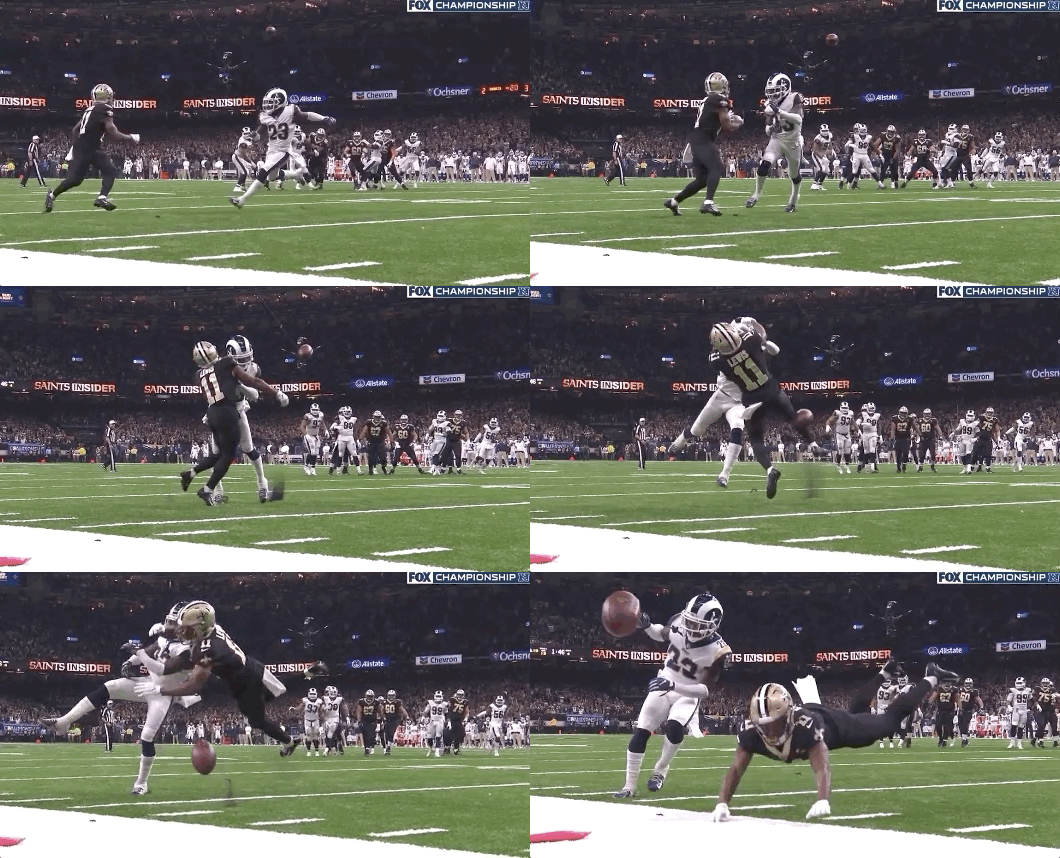
The rule change does make some sense on the surface. What happened to the Saints in the NFC championship was an egregious missed call, and it cost them an appearance in the Super Bowl. I don’t care. That’s sports, there is a human element to it, and until we get robot refs, teams are going to get screwed. But it happens, and over the long haul it always evens out, so deal with it. I’m sure the Saints were gifted calls along the way at some point that went in there favor, but if you stomp your feet and cry loud enough in today’s day and age, apparently you get what you want. But be careful what you wish for, because as previously seen with the catch rule, there are a boat load of new problems being introduced with this rule.

When determining what a catch is, the NFL previously decided that a player must maintain control of the ball, make a football move, and survive the ground. The surviving the ground part is pretty subjective, and led to a ton of controversial calls being upheld, or overturned via replay. When you completely stop the game, and watch a replay in slow motion HD, it is wildly different then viewing the game in real time. Something that looked like an obvious catch in the moment was being overturned, because the ball came slightly loose for a split second as a player was making contact with the ground. And now we are going to try and apply the same standard to pass interference, where guys are constantly hand fighting and running full speed side by side. It just doesn’t seem like it can be implemented effectively. Sirius XM radio host Jeff Mans made a good point the other day in reference to using replay for pass interference, “It’s like a freeze frame in porn, there’s just some things you don’t wanna see.”
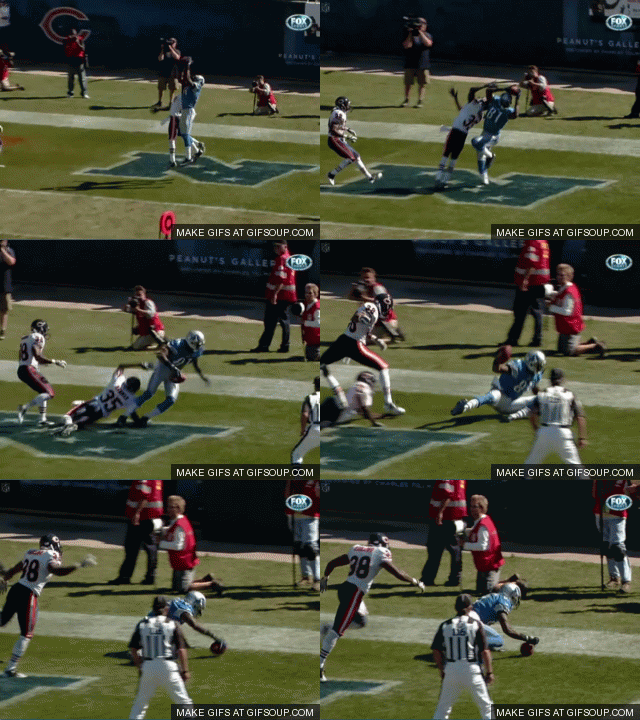
The (at least one of) obvious play(s) that comes to mind is Calvin Johnson in 2010, where he appears to catch a game winning touchdown against the Bears, that was ruled an incompletion, because he did not survive the ground. Johnson “catches” the ball, got both feet down, spins the entire lower left side of his body onto the ground, puts his left hand down, and as he puts his right hand down that is holding the ball, the ball comes loose. CLEARLY INCOMPLETE!!!
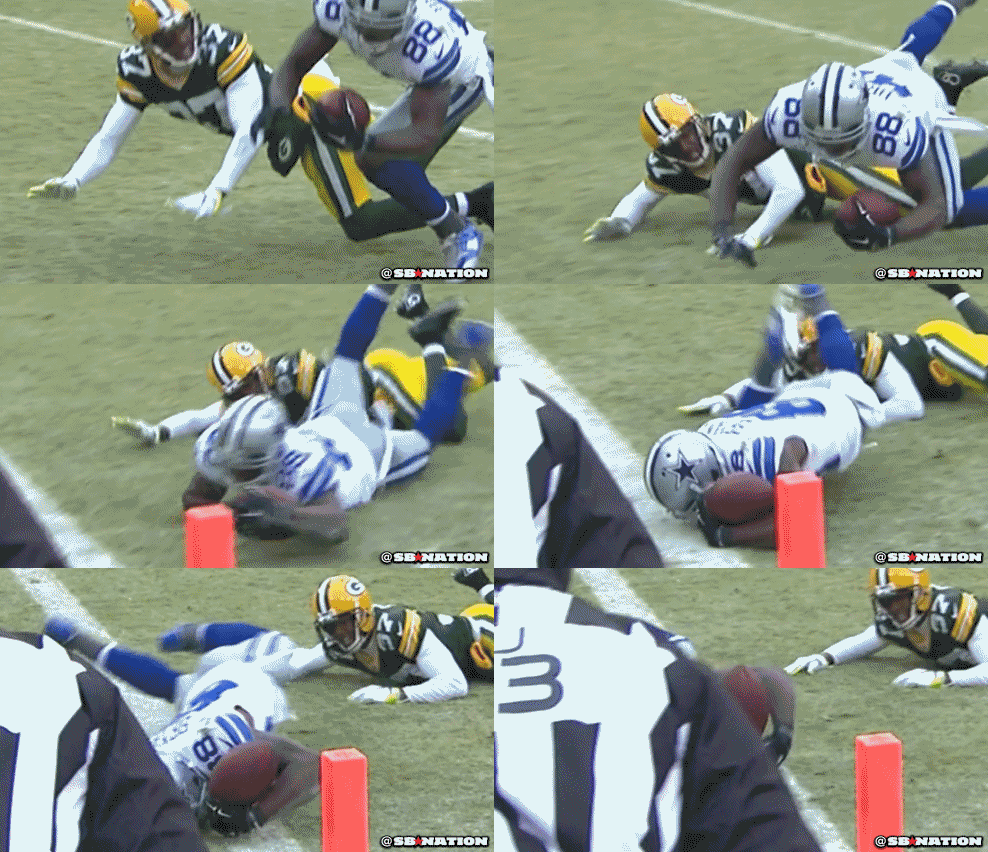
Then there was Dez Bryant, a play that was called a catch on the field, and it seemed like replay was only to determine if it was a touchdown or not, somehow got overturned to an incompletion because he didn’t maintain possession through the ground. Bryant never lost control of the ball, and the Dez caught it memes will live on forever whenever there is a questionable catch ruling. That play happened in 2014, and the rule wasn’t adjusted to remove the survive the ground language until 2018. The change was made following a Jesse James potential touchdown that was overturned, and gave the Patriots home field advantage during the 2017 playoffs. “What is a catch?” is still debated on every close call, and trying to come up with a blanket rule that holds up in every situation is impossible. Making a football move is still subjective language and the arguments will go on forever. Now we introduce the cousin to “What is a catch?”, and that is “What is pass interference?”
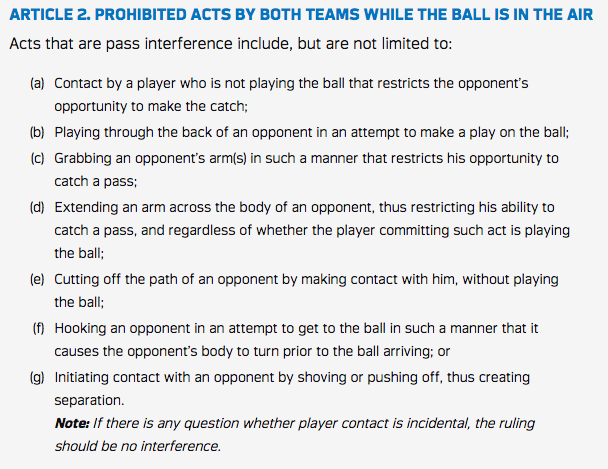
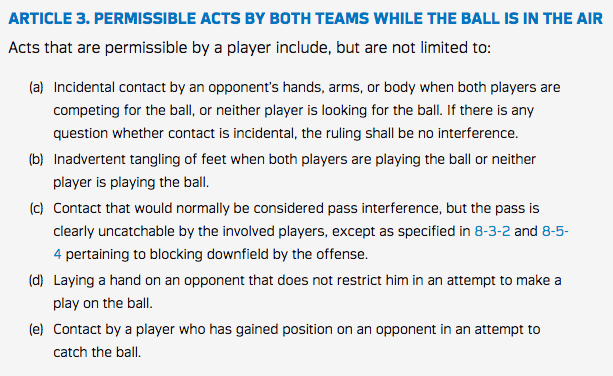
There is a laundry list of things that constitute pass interference, but in terms of replay reviews being overturned, the NFL has gone with the terms “significantly hindered” or “did not significantly hinder” an opponent. Again, more subjective terms that I’m sure will have no unintended outcomes. This new rule was instituted because one single play in a big moment was missed, but the ramifications are massive. Joe Flacco must be ecstatic, because during his Super Bowl run, he mastered the throw the ball as far as you can and try to get pass interference called, and it worked! Now he has the added benefit of his team being able to challenge those plays, and the Broncos are due for deep playoff run this year.

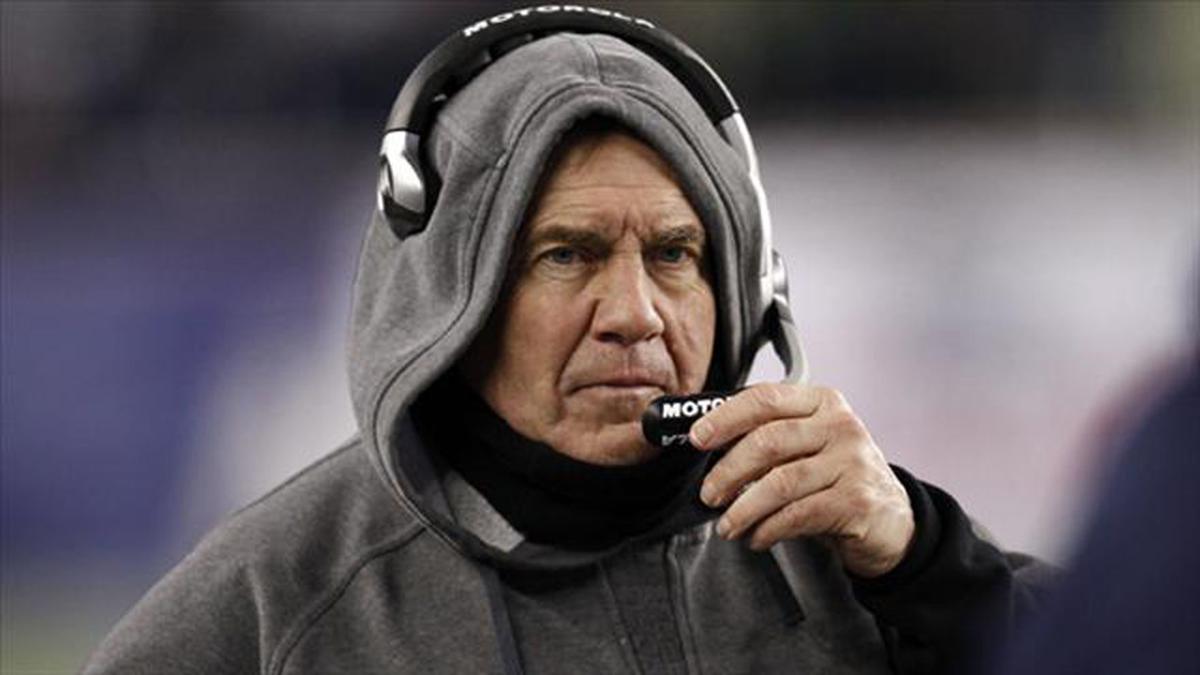
The use of replay challenges has been limited somewhat by making it a coaches challenge during a majority of the game, and a booth review under two minutes, with an emphasis on a “Hail Mary” being a play to be reviewed. The problem is, there is contact between receiver and defensive back on every play, and that contact goes way up on a “Hail Mary.” So on a play that potentially decides the game, we’re going to have a long review process, and a subjective decision if a player was significantly hindered or not? Great. Another issue, coaches don’t need to use their challenges anymore because all scoring plays and all turnovers are reviewed automatically. That leaves things like the spot of the ball, or a player keeping his feet in bounds as plays most likely to be challenged. The potential to challenge a play that leads to a 50 yard penalty, or the ball being placed on the 1 yard line if the foul occurs in the end zone, is going to be challenged whenever it is even close to being pass interference. Keep in mind, Bill Belichick finds ways to exploit even the smallest gray area of the rule book, and the NFL just presented him with an ocean sized gray area.
The biggest issue that I see coming from this is an overall increase in pass interference being called. This feels very similar to when all turnovers and scoring plays became reviewable. When the league made that change, officials would plays that looked like a clear non-fumble play out, because they knew it could be reviewed. The defense would return the “fumble” for a touchdown, and then we would have nice long replay review break. The play ends up being somewhat close between fumble and non-fumble, but objectively looks like a non-fumble to most people. However, when you introduce the language of the replay rule that it must be “clear and obvious” in order to overturn a call, the defense has now been given an unwarranted touchdown. The offense goes from driving, to being down an additional 7 points, and the game has completely changed because a referee wanted to rely on technology, instead of making the correct call in real time. When there is barely any contact on a huge play to decide a game, a ref is more likely to throw a flag for pass interference, and then go to the booth. But then you need “clear and obvious” video that the defender “did not significantly hinder” the receiver in order to overturn the call. Feels like we have a pattern with the NFL making these kind of rule changes, and it will be no different with pass interference.
A few other things that I don’t fully understand about the rule, if there is a replay review for a turnover, but there is clear and obvious defensive pass interference when the ref is looking at the replay, what happens? Can they just ignore the turnover altogether and award the offense the ball and a penalty? It makes sense, but outside of 2 minutes, pass interference has to be a coach’s challenge. If a coach gets a longer look at the replay because they are already reviewing the turnover, can he then challenge the play for pass interference? Or does it have to be simultaneous with them reviewing the turnover? I tried reading the official NFL rule book, and none of these specific scenarios are explained, so I have no idea how they will be handled. This same concept can be applied for all plays that are automatically reviewed, as well as a non-pass interference coach’s challenge. If a coach challenges the spot of the ball, does pass interference also, fall under that challenge, or do you have to pick which one you’re challenging?

Also, how will pick plays factor in? Coaches and players have gotten very good at disguising routes to pick a defender and lead to an open touchdown, so if it looks like an accident, but the defender is “significantly hindered,” does that still fall under “incidental contact”? There is just so many additional questions that this rule will introduce, not to mention more commercials, and it was all to compensate for one play. And why was this implemented for the full 2019 season with no testing, try it for the preseason, gather some data, and apply it for 2020. I know the league wants to get these calls right, but they just make the rules more subjective by doing this. We still don’t know what a catch is, so if there is a replay that involves both a catch and a pass interference challenge, I think my head might explode. Now time for a commercial break…

 The Jackpot